
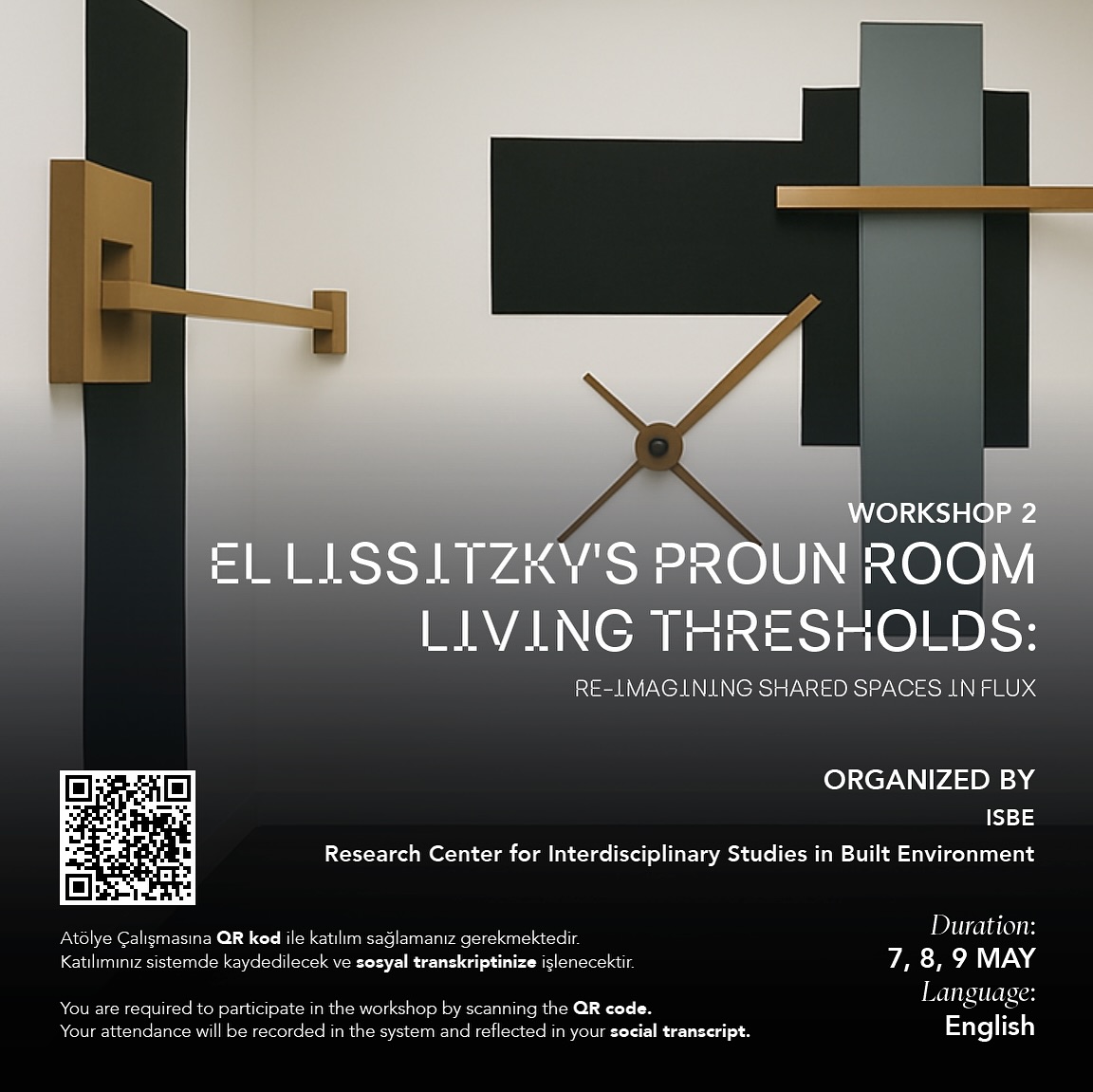
Bir mekân olmak zorunda kalmadan, bir şey olmaya evrilen bir yer olabilir mi?
DAÜ Mimarlık Fakültesi 12. Uluslararası Tasarım Haftası’na, Yapılı Çevre Disiplinlerarası Araştırma Merkezi (ISBE) olarak, “El Lissitzky’nin Proun Odası – Yaşayan Eşikler: Değişim Halindeki Ortak Mekânları Yeniden Düşünmek” başlıklı atölye çalışmasıyla katıldık.
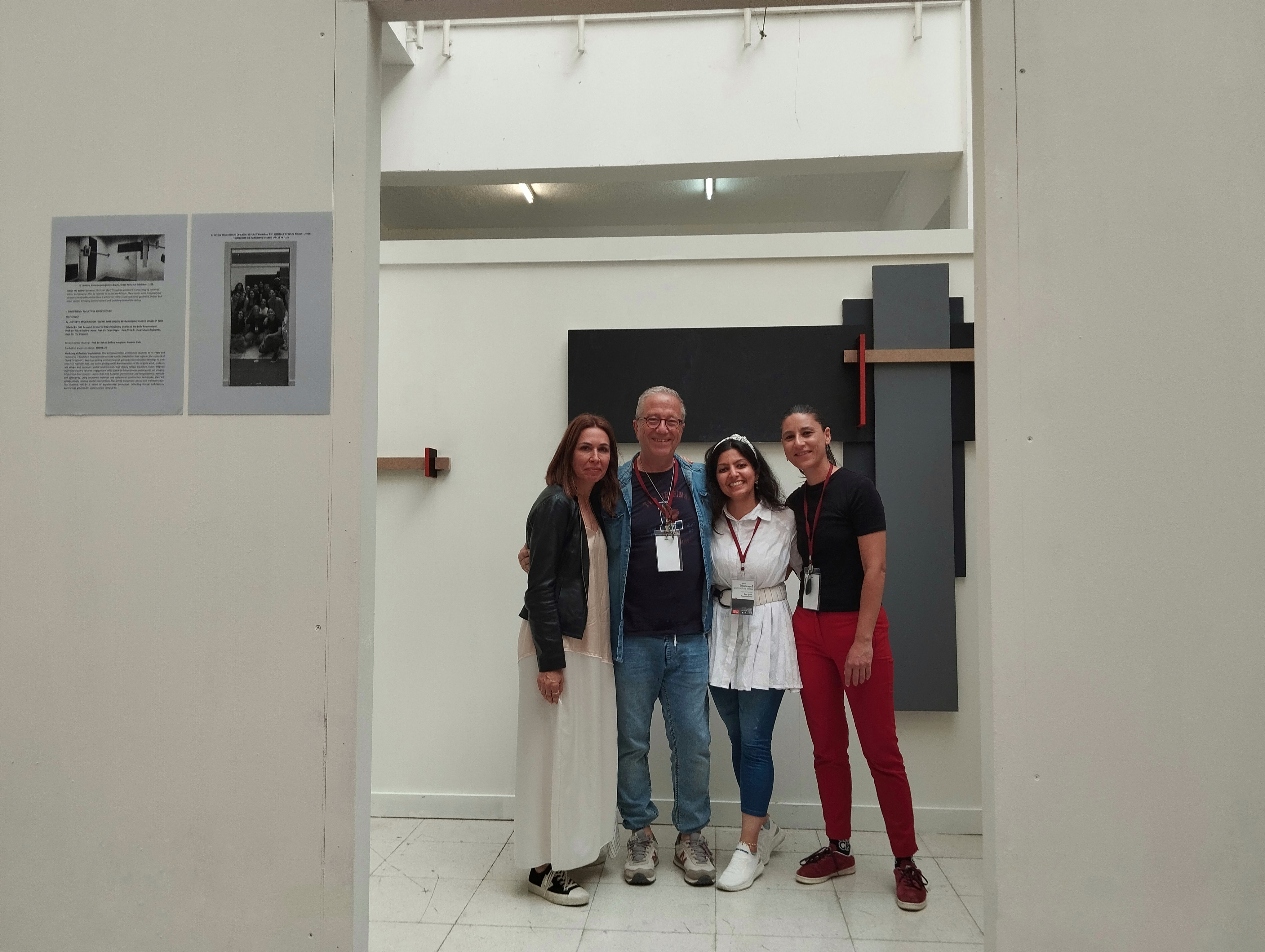
Öğrencilerimizle birlikte, El Lissitzky’nin avangart “Proun Room” (1923) çalışmasından ilhamla, mekânsal eşik kavramını yeniden ele aldık. Üç gün süren bu üretim sürecinin sonunda, MEPAŞ sponsorluğunda, Prof. Dr. Kokan Grchev ve asistanımız Nazanin Dalir’in hazırladığı rekonstrüksiyon detayları doğrultusunda yalnızca birebir (1:1) ölçekli bir yeniden yapım gerçekleştirmekle kalmadık; aynı zamanda 1/10 ölçekli dört farklı yorum geliştirdik:
1. Orijinal formun yeniden deneyimlenmesi
2. Farklı bir felsefe ve renk anlayışıyla dönüştürülmüş hali
3. Aynı elemanlarla farklı kompozisyon ve renklemeyle oluşturulan bir yorum
4. Alternatif bir düzenleme ve renkle yeniden kurgulanan bir versiyon

Bu deneyim, geçiciliğin içinde kalıcılığı; hareketin içinde durmayı sorguladığımız yaşayan eşiklere odaklanmamızı sağladı. Her bir öğrenci, bu liminal alanları sadece fiziksel değil, aynı zamanda duygusal ve düşünsel geçiş mekânları olarak yeniden tanımladı.
Bu yalnızca bir mekân inşası değil, bir oluş süreciydi.
Bu çok katmanlı düşünce ve üretim yolculuğuna yaratıcılıkları, emeği ve heyecanlarıyla katkı sunan tüm öğrencilerimize gönülden teşekkür ederiz.


Can a place evolve into something without being bound to the definition of “a space”?
As the Research Center for Interdisciplinary Studies of the Built Environment (ISBE), we participated in the 12th International Design Week organized by the Faculty of Architecture at Eastern Mediterranean University with a workshop titled “El Lissitzky’s Proun Room – Living Thresholds: Re-imagining Shared Spaces in Flux.”
Together with our students, we revisited the concept of spatial thresholds, drawing inspiration from El Lissitzky’s avant-garde work Proun Room (1923). At the end of this three-day production process, and with the support of MEPAŞ, we not only constructed a full-scale (1:1) reconstruction based on detailed drawings prepared by Prof. Dr. Kokan Grchev and our assistant Nazanin Dalir, but also developed four distinct interpretations at 1/10 scale:
- A re-experiencing of the original form
- A transformed version with a different philosophy and color scheme
- A new interpretation using the same elements with a different composition and coloring
- An alternative configuration and color reinterpretation using the same components
This experience allowed us to focus on living thresholds—questioning permanence within transience, and stillness within motion. Each student redefined these liminal spaces not only as physical zones but also as emotional and cognitive sites of transition.
This was not merely the construction of a space, but a process of becoming.
We extend our heartfelt thanks to all our students who contributed to this multi-layered journey of thought and creation with their creativity, dedication, and enthusiasm.

 C E R E N B O G A C