

In recent years, artificial intelligence has become increasingly visible in architectural practice and education. This visibility calls for a deeper reflection—not only on how we use these tools, but on how we position ourselves in relation to them. When I initiated the AI in Architecture seminar series, my primary motivation was to open up a critical pedagogical discussion, rather than treating AI as a passing trend or merely a productivity-enhancing tool.
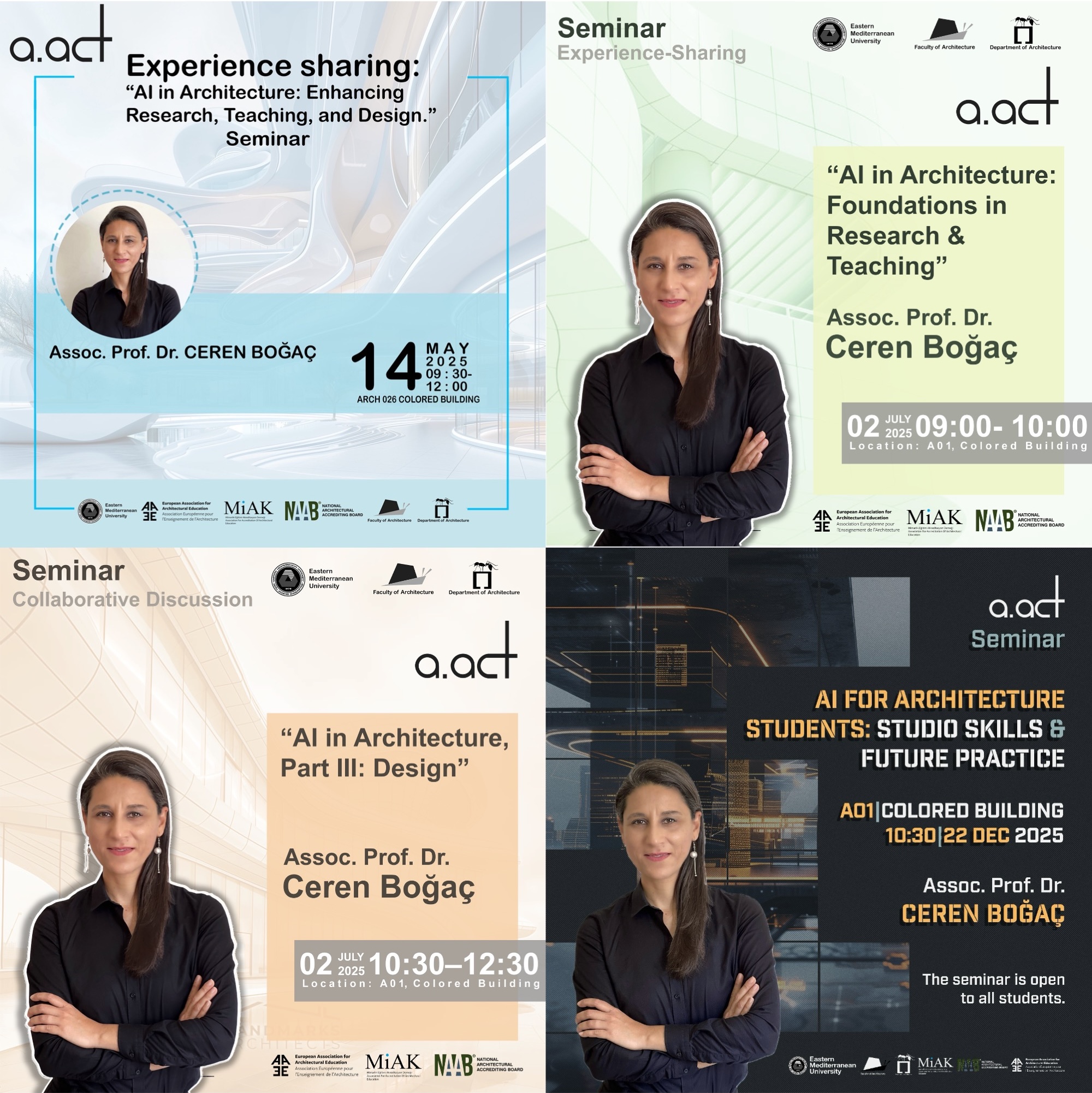
The earlier sessions of the series, addressed to faculty members, focused on the role of AI in architectural research, its contribution to academic workflows, and the ethical questions emerging alongside its growing use. This was followed by a design-oriented session, where we collectively discussed the current and potential impacts of AI on architectural design processes. Throughout these seminars, I consistently emphasized the need to move beyond the incidental use of AI in education and to frame it within intentional, conscious, and ethically grounded pedagogical approaches.

The student-focused seminar, “AI for Architecture Students: Studio Skills and Future Practice,” marked a significant shift in this ongoing conversation. It aimed to engage students directly, recognizing that the relationship with AI is often formed most decisively within the studio environment. During the session, we explored how AI tools can support design exploration, visualization, feedback, research, and learning processes through practical examples, while also critically addressing their limitations, biases, and responsibilities.
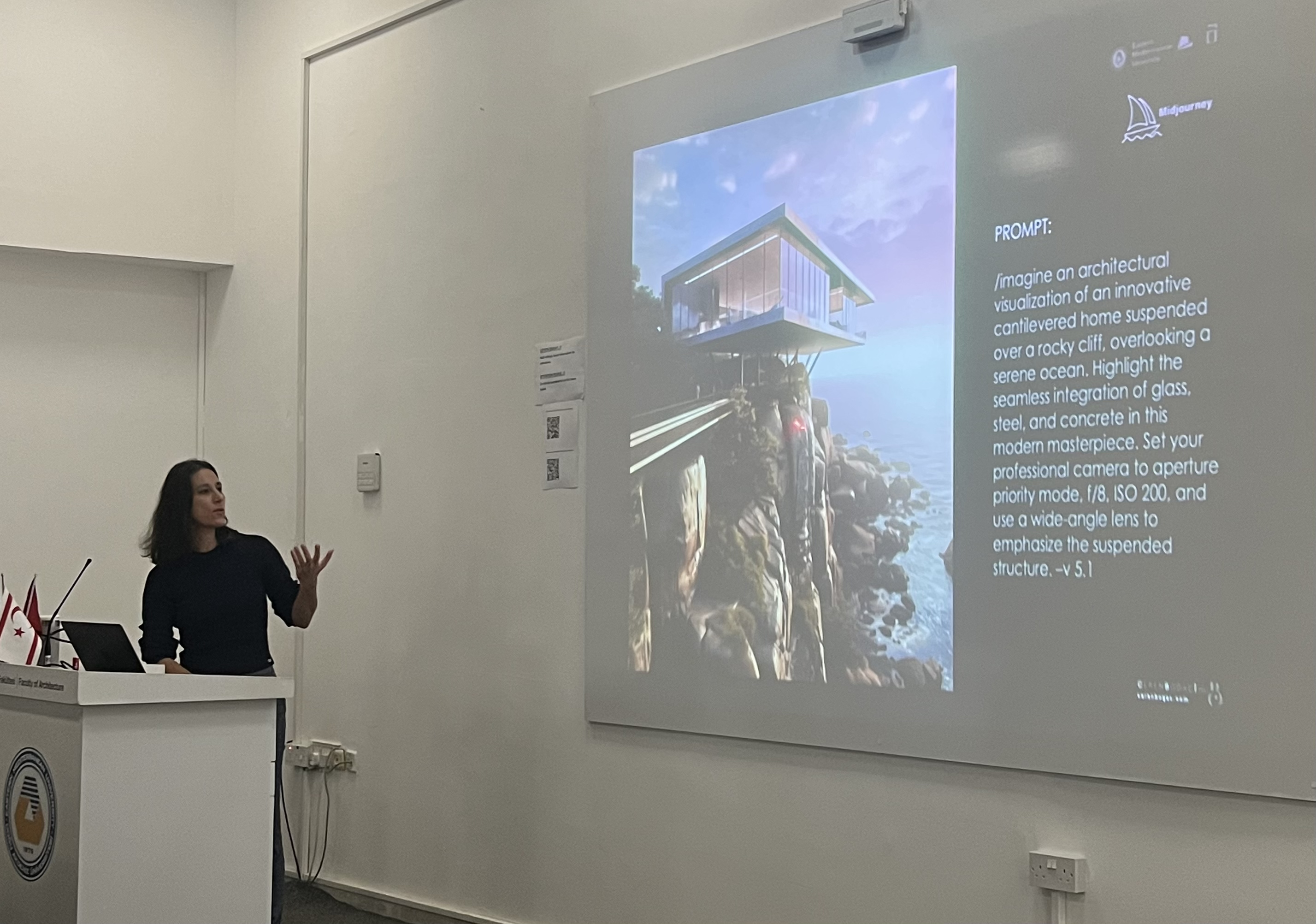
For me, the core objective of this seminar was not to suggest which tools students should use, but rather to encourage them to ask why, when, and how they should be used. In an era where answers are increasingly easy to generate, the ability to ask meaningful and critical questions becomes ever more essential. Architectural education, at this threshold, must cultivate not only technical competence, but also ethical awareness, critical thinking, and adaptive learning skills.
I see this seminar as a starting point for future workshops and discussions. Rather than glorifying or rejecting AI, my aim is to approach it as a learning space that keeps human intent, contextual understanding, and creative responsibility firmly at the center.

Son yıllarda mimarlık pratiğinde ve eğitiminde yapay zekânın giderek daha görünür hale gelmesi, bu araçlarla nasıl çalıştığımızdan çok, nasıl konumlandığımızı sorgulamayı gerektiriyor. Bu seminer serisini başlatırken temel motivasyonum, yapay zekâyı geçici bir “trend” ya da yalnızca üretim hızını artıran bir araç olarak değil; eleştirel düşünceyle birlikte ele alınması gereken pedagojik bir alan olarak tartışmaya açmaktı.
“Mimarlıkta Yapay Zekâ” başlığı altında daha önce fakülte üyelerine yönelik gerçekleştirdiğim sunuşlarda, yapay zekânın mimarlık araştırmalarında nasıl araçsallaştığını, akademik üretimdeki rolünü ve bu süreçte ortaya çıkan etik soruları ele aldım. Ardından tasarım süreçlerine odaklanan ikinci aşamada, yapay zekânın güncel ve olası etkilerini birlikte tartıştık. Bu süreçte özellikle altını çizdiğim nokta, yapay zekânın öğretim sürecinde rastlantısal biçimde kullanılan bir araç olmaktan çıkarılması ve kasıtlı, bilinçli ve etik bir pedagojik çerçeveye oturtulması gerekliliğiydi.
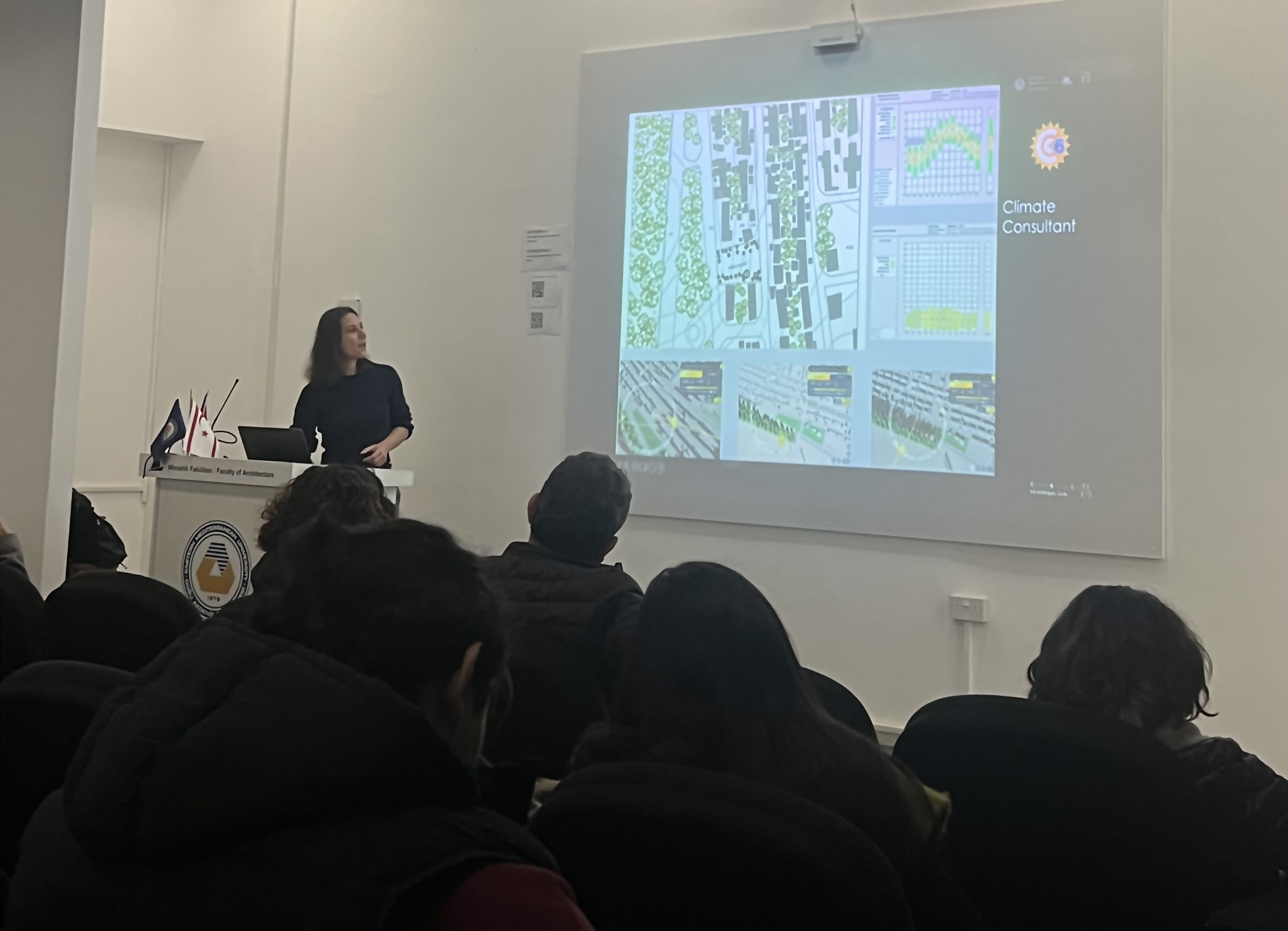
“AI for Architecture Students: Studio Skills and Future Practice” başlıklı bu son seminer ise, bu tartışmayı doğrudan öğrencilerle buluşturmayı amaçladı. Çünkü yapay zekâ ile kurulan ilişki, en erken ve en etkili biçimde stüdyo ortamında şekilleniyor. Bu oturumda yapay zekânın tasarım keşfi, görselleştirme, geri bildirim alma, araştırma ve öğrenme süreçlerinde nasıl kullanılabileceğini pratik örnekler üzerinden ele alırken; aynı zamanda bu araçların sınırlarını, yanılgılarını ve beraberinde getirdiği sorumlulukları da tartıştık.
Benim için bu seminerin asıl amacı, öğrencilere “hangi aracı kullanmalısınız?” sorusundan çok, “neden, ne zaman ve nasıl kullanmalısınız?” sorusunu sordurabilmekti. Çünkü yapay zekâ çağında cevaplara ulaşmak kolaylaşırken, doğru soruları sormak giderek daha kritik hale geliyor. Mimarlık eğitiminin de bu yeni eşikte, teknik beceriler kadar eleştirel farkındalığı, etik duruşu ve öğrenme esnekliğini beslemesi gerektiğine inanıyorum.
Bu etkinliği, devam edecek atölye ve buluşmalar için bir başlangıç olarak görüyorum. Yapay zekâyı mimarlıkta ne yücelten ne de dışlayan; insan niyetini, bağlamı ve yaratıcılığı merkeze alan bir öğrenme alanı olarak birlikte düşünmeye devam edeceğiz.
 C E R E N B O G A C