

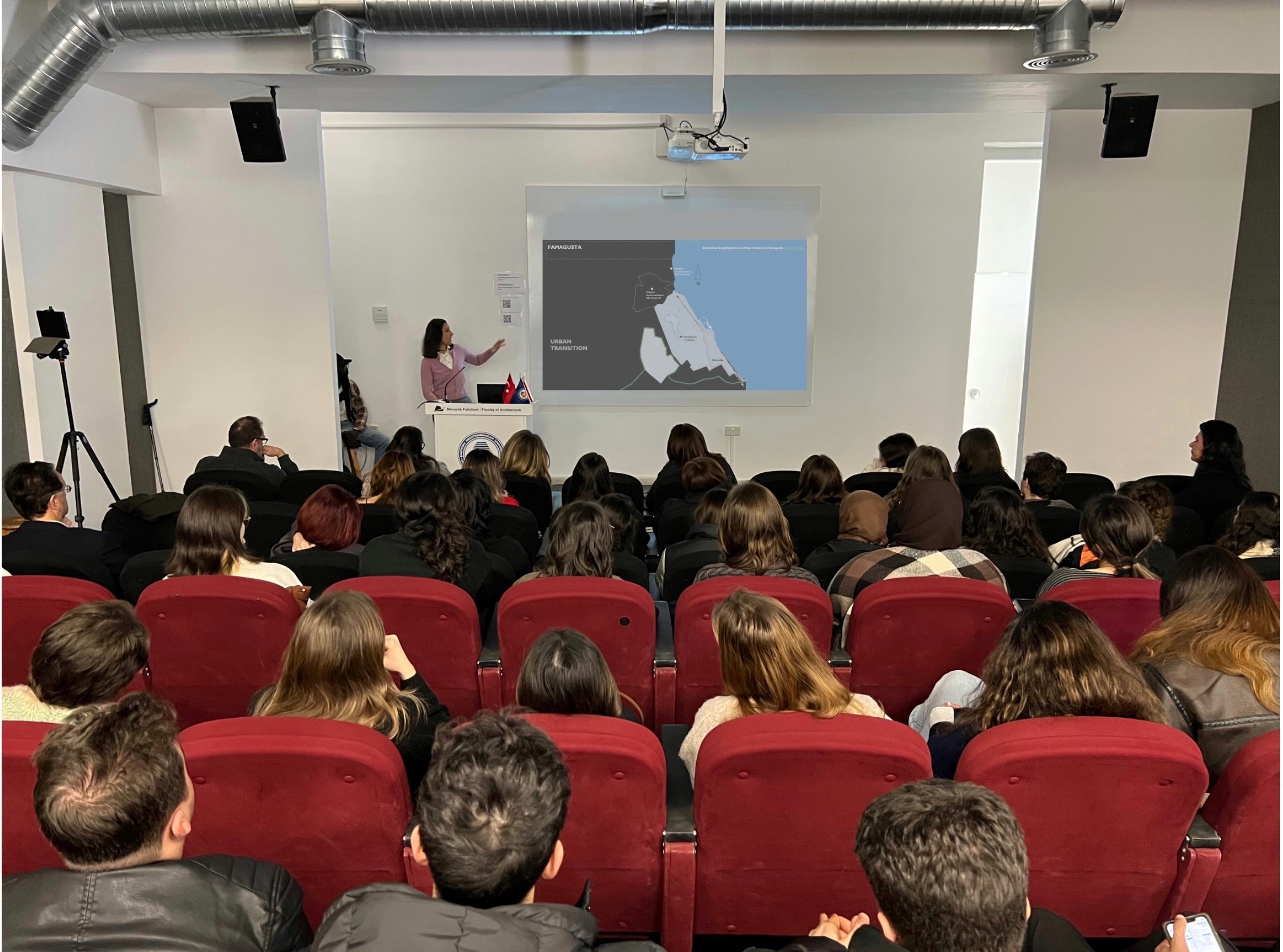
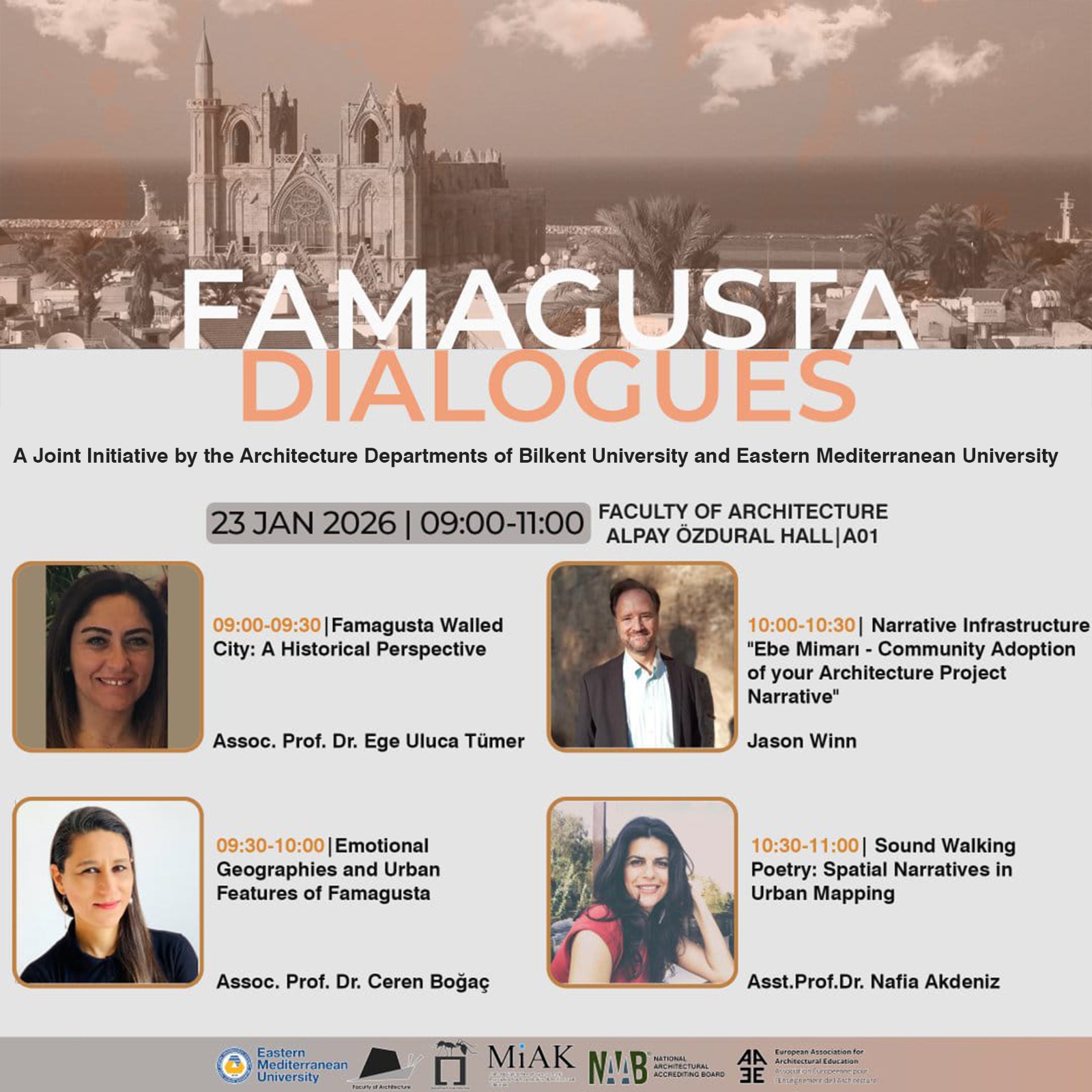
Today, within the scope of Famagusta Dialogues—a joint initiative of the Departments of Architecture at Bilkent University and Eastern Mediterranean University—I delivered my talk titled “Emotional Geographies and Urban Futures of Famagusta”. I tried to share with Bilkent’s third-year architectural design studio ways of reading Famagusta not only as a physical fabric, but through the lenses of memory, emotion, traces of conflict/conciliation, and possible futures.
Through this gathering, the four of us—as researchers—wanted to create a starting ground for the Bilkent students and academics we hosted in our city and at our institution, to support their work in approaching Famagusta’s urban fabric in layered ways.
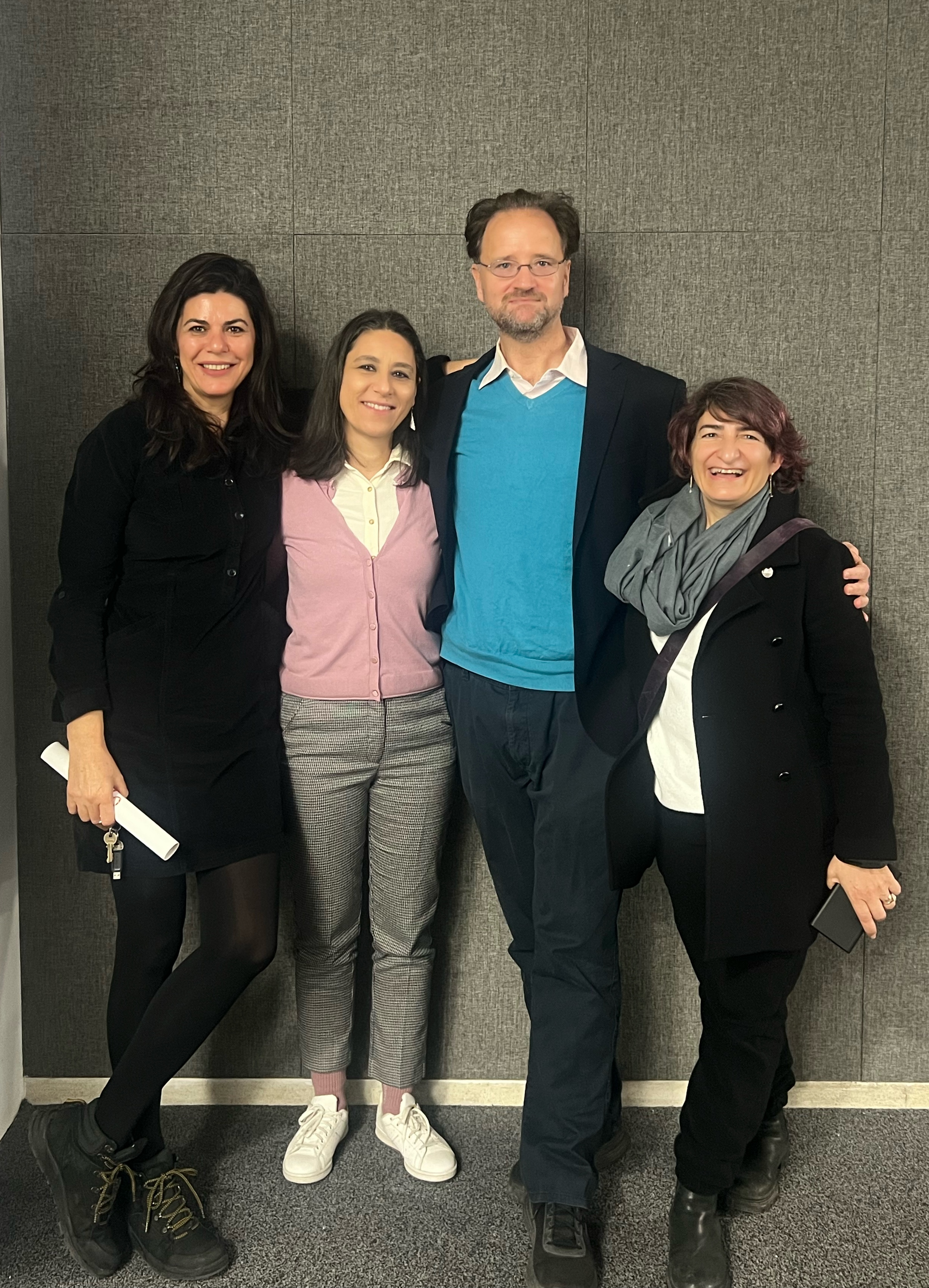
Reuniting in the same programme with Jason Winn (my former master’s thesis student) and Nafia Akdeniz (my former PhD thesis student) also reminded me of one of the most rewarding aspects of academic supervision: seeing students find and strengthen their own voices as independent researchers. I felt proud of them both once again.
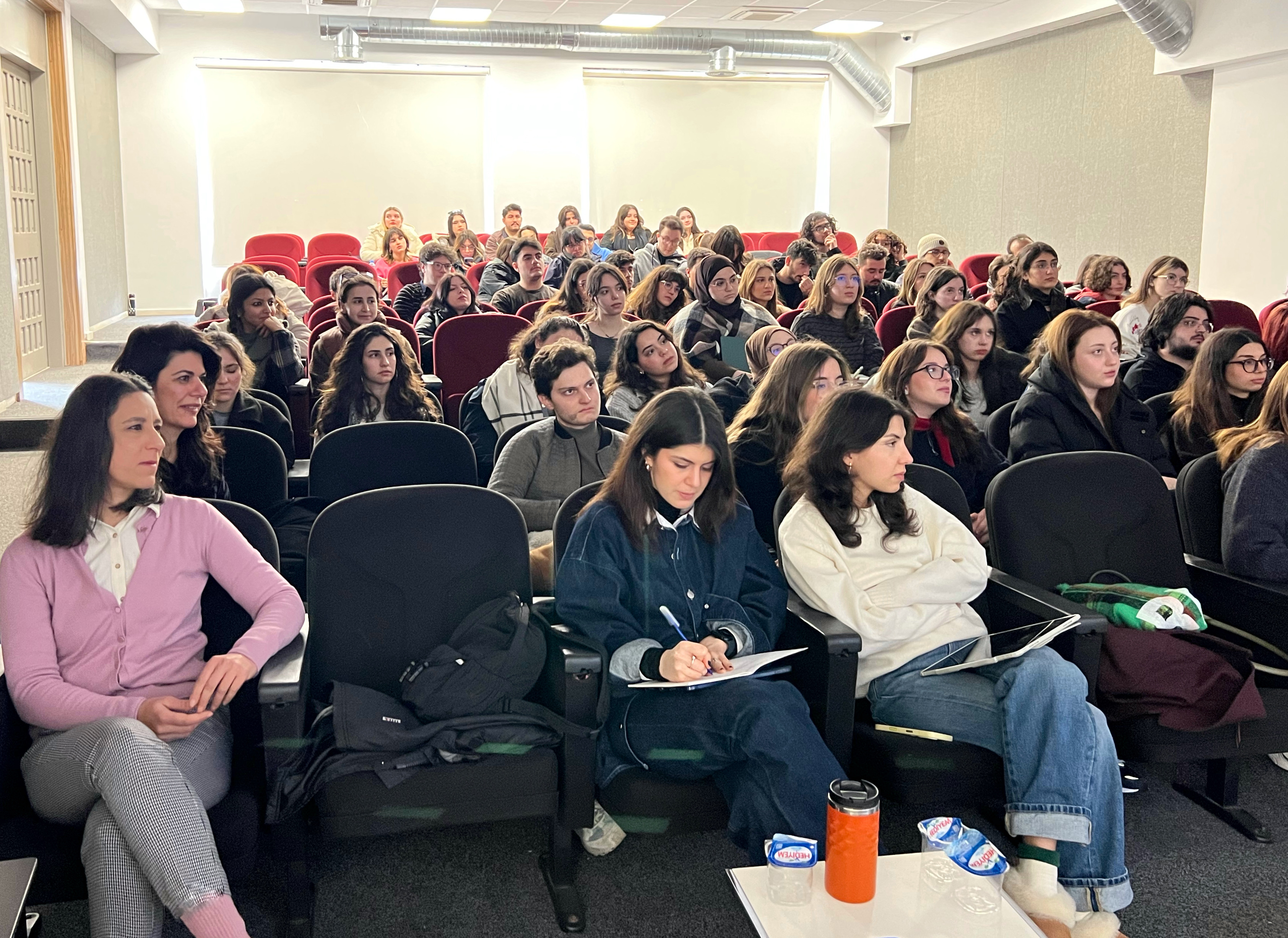
I would like to thank Pınar Uluçay, who organised this event on behalf of our department, our faculty and department administrations, and everyone who contributed; Ege Uluca, as well as Jason Winn and Nafia Akdeniz, for sharing their work and experience with students and offering valuable perspectives; and everyone who attended, listened, and asked questions.
May our dialogues on Famagusta continue to grow. As we speak about the city, its knots—and the pathways toward solutions—become increasingly visible.
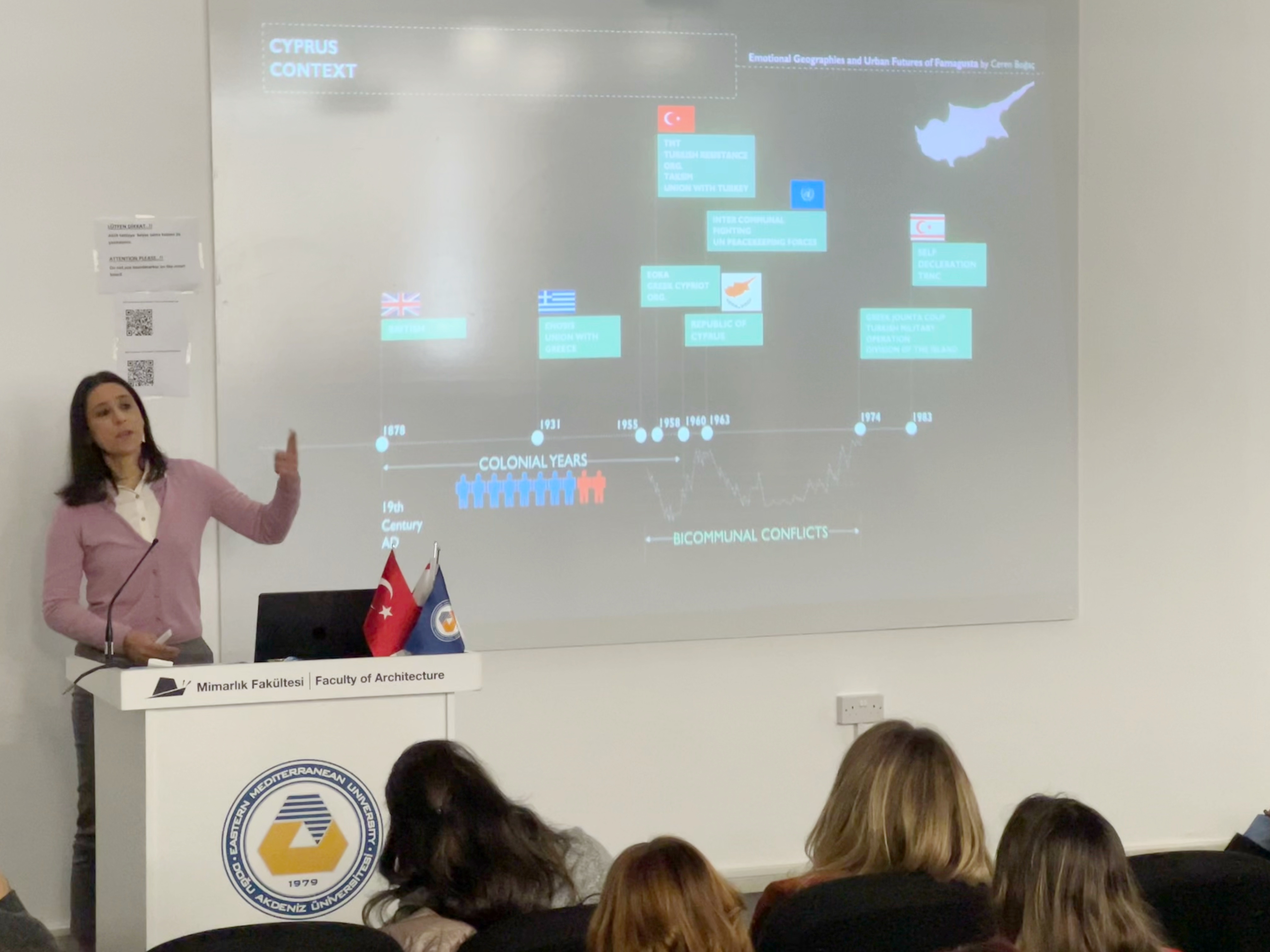
Bugün Bilkent Üniversitesi ve Doğu Akdeniz Üniversitesi Mimarlık Bölümlerinin ortak girişimi olan Famagusta Dialogues (Mağusa Diyalogları) kapsamında Bilkent Üniversitesi öğrencilerine “Emotional Geographies and Urban Futures of Famagusta” (Mağusa’nın Duygusal Coğrafyaları ve Kentsel Geleceği) başlıklı sunuşumu gerçekleştirdim. Mağusa’yı yalnızca bir fiziksel doku olarak değil; hafıza, duygu, çatışma/uzlaşı izleri ve olası gelecekler üzerinden okuma ipuçlarını Bilkent’in 3. sınıf mimari tasarım stüdyosu ile paylaşmaya çalıştım.
Bu buluşmayla, şehrimizde ve kurumumuzda misafir ettiğimiz Bilkentli öğrenci ve akademisyenlerine, dört araştırmacı olarak Mağusa’daki kentsel dokuyu katmanlarıyla ele almaya yönelik çalışmaları için bir başlangıç zemini kurmak istedik.
Aynı programda yer alan Jason Winn (eski master tez öğrencim) ve Nafia Akdeniz (eski doktora tez öğrencim) ile yeniden aynı etkinlikte buluşmak ise akademik danışmanlığın en güzel taraflarından birini hatırlattı: öğrencilerin bağımsız araştırmacılar olarak kendi seslerini bulması ve güçlendirmesi. İkisiyle de bir kez daha gurur duydum.
Bölümümüz adına bu etkinliği düzenleyen Pınar Uluçay’a, kurum yöneticilerimize ve emeği geçen herkese; çalışmalarından ve deneyimlerinden öğrencilerle bilgi ve perspektif paylaşan Ege Uluca’ya, Jason Winn’e ve Nafia Akdeniz’e; katılan, dinleyen ve soru soran herkese teşekkür ederim.
Mağusa üzerine diyaloglarımız büyüsün. Kent konuşuldukça, düğümleri kadar çözüm yolları da görünürleşir.
 C E R E N B O G A C