
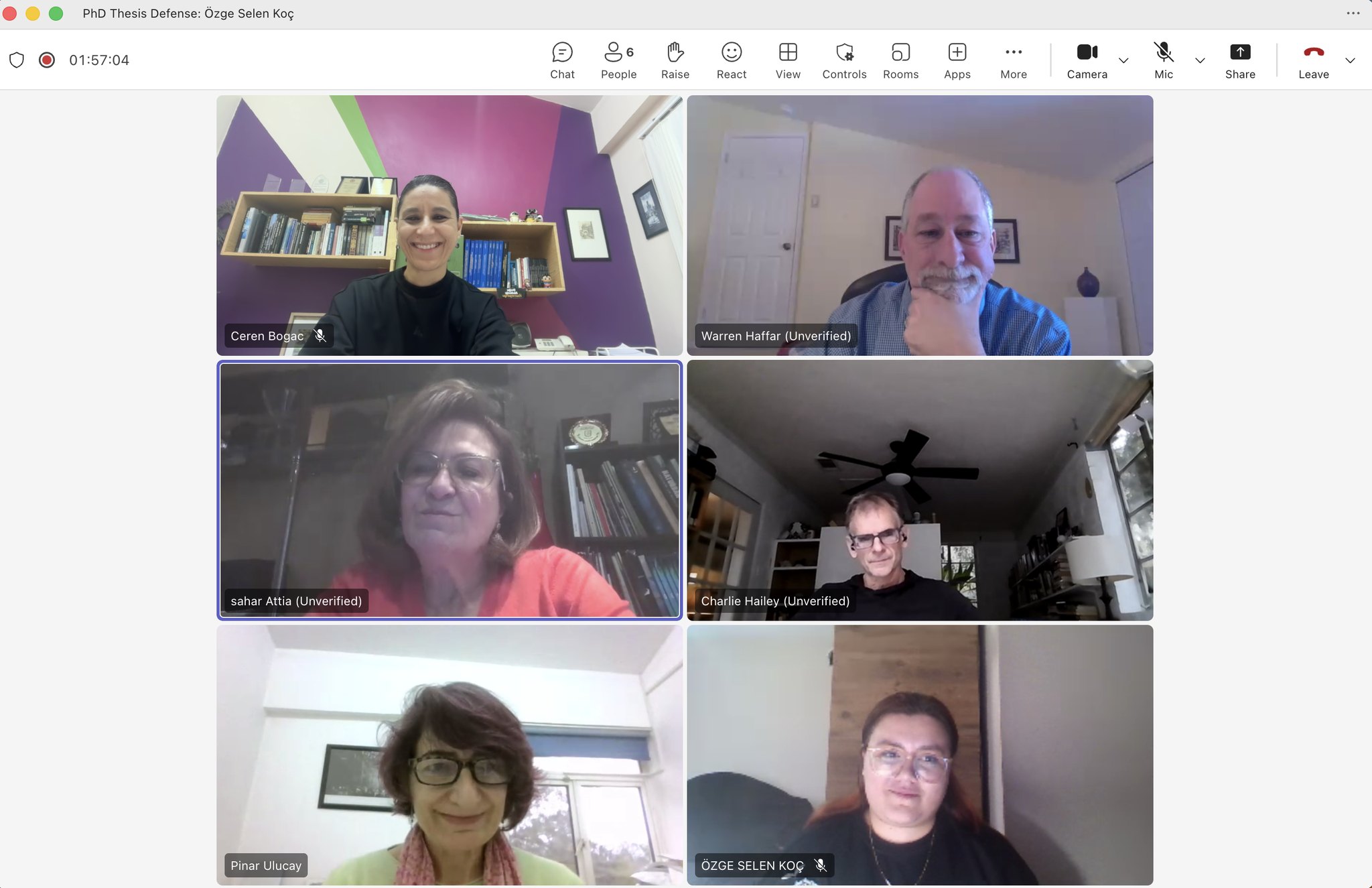
After two years of a master’s program and five years of a doctoral journey, my dear student Özge Selen Koç has earned her PhD title. In her dissertation titled “The Multi-Scalar Urban Ecosystem Model for Environmental Justice,” we questioned why cities still produce fragmented solutions in the face of intertwined crises such as climate change, ecological degradation, inequality, and the digital divide. We demonstrated how sustainability approaches, when confined to a single theme or a single scale, tend to weaken critical dimensions such as environmental justice and ecological limits.
In response to this gap, we developed the framework Özge calls the “Balance Approach,” which considers the city as a multi-scalar ecosystem where the layers of community, ecology, and technology operate together. This perspective was materialized through the Multi-Layered Urban Ecosystem Model. By testing the model through case studies in Sweden, the Netherlands, Singapore, and Colombia, we revealed how disconnections between scales reproduce vulnerability and inequality, while also offering a strong evaluative framework for more just, balanced, and resilient spatial strategies.
I am deeply proud of this work and fully believe it will inspire many future studies and practices around the world. I would like to sincerely thank our thesis monitoring committee members, Prof. Dr. Charlie Hailey from the University of Florida and Assoc. Prof. Dr. Pınar Uluçay Righelato from our institution, for sharing their insights throughout the process. I also extend my gratitude to Prof. Dr. Sahar Attia from Cairo University and Prof. Dr. Warren Haffar from Arcadia University for their time and valuable contributions.
Wishing you a bright path ahead, Özge!
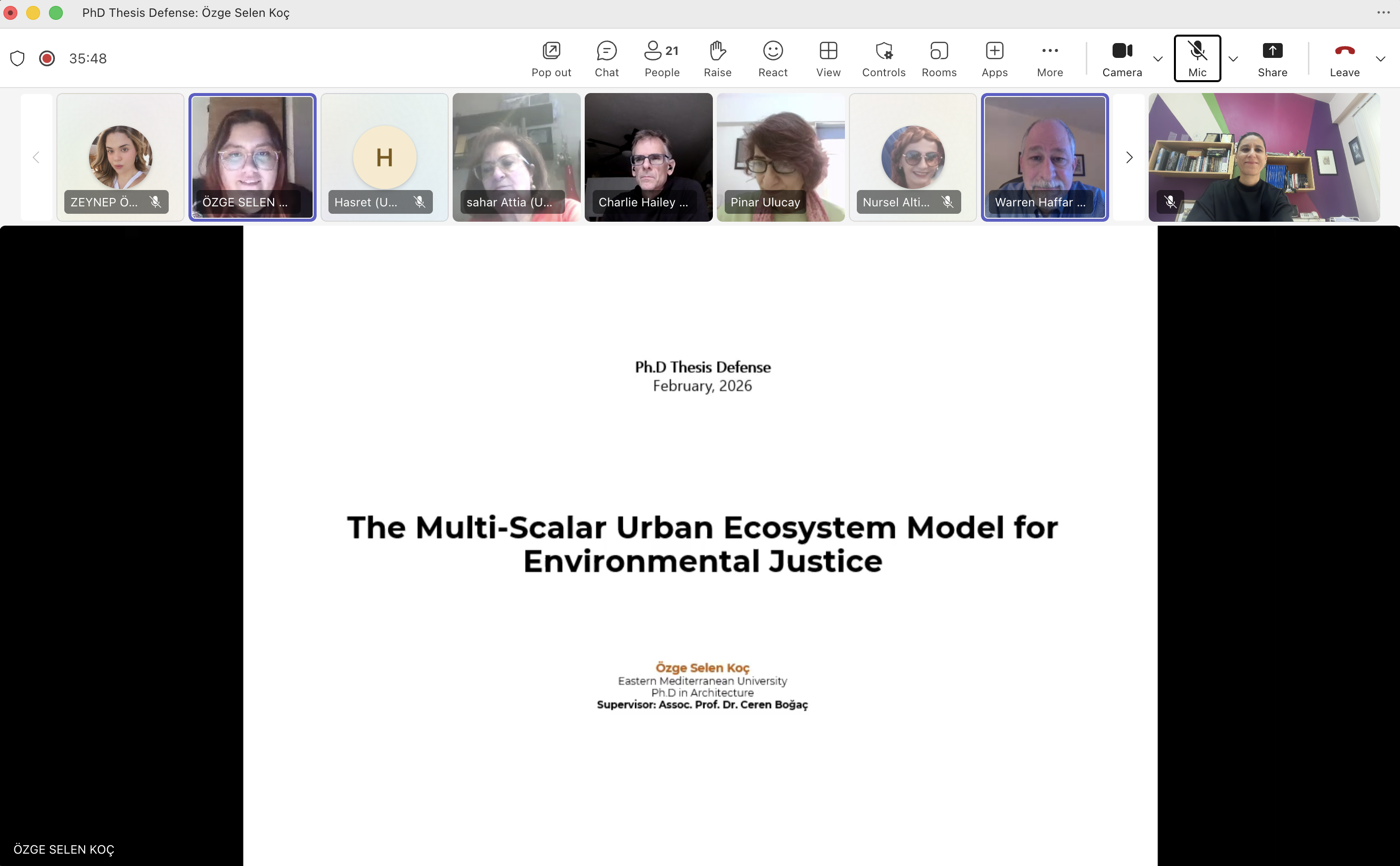
2 yıl yüksek lisans, 5 yıl doktora serüvenimizin ardından sevgili öğrencim Özge Selen Koç doktora unvanını aldı. “Çevresel Adalet İçin Çok Ölçekli Kentsel Ekosistem Modeli” (The Multi-Scalar Urban Ecosystem Model for Environmental Justice) başlıklı doktora çalışmasında, kentlerin iklim, ekoloji, eşitsizlik ve dijital uçurum gibi iç içe geçen krizler karşısında neden hala parçalı çözümler ürettiğini sorgulayarak, sürdürülebilirlik yaklaşımlarının tek tema/tek ölçek içinde kaldığında çevresel adalet ve ekolojik sınırlar gibi kritik boyutları nasıl zayıflattığını ortaya koyduk.
Bu boşluğa yanıt olarak, Özge’nin “Denge Yaklaşımı” adını verdiği çerçeveyi geliştirerek kenti topluluk–ekoloji–teknoloji katmanlarının birlikte işlediği çok ölçekli bir ekosistem olarak ele aldık ve bunu Çok Katmanlı Kentsel Ekosistem Modeli ile somutlaştırdık. İsveç, Hollanda, Singapur ve Kolombiya örnekleri üzerinden test ettiğimiz bu modelle, ölçekler arası kopuklukların kırılganlık ve eşitsizliği nasıl yeniden ürettiğini görünür kılarken, daha adil, dengeli ve dirençli mekansal stratejiler için güçlü bir değerlendirme çerçevesi de sunduk.
Gurur duyduğum bu çalışmanın, ilerleyen dönemde dünyadaki birçok araştırma ve uygulamaya ilham vereceğine inancım tam. Tüm süreç boyunca görüşlerini bizimle paylaşarak katkı koyan tez izleme komitesi üyelerimiz Florida Üniversitesi’nden Prof. Dr. Charlie Hailey ve kurumumuzdan Yrd. Doç. Dr. Pınar Uluçay Righelato’ya, ayrıca bize zaman ayırıp değerli öngörülerini paylaşan Kahire Üniversitesi’nden Prof. Dr. Sahar Attia’ya ve Arcadia Üniversitesi’nden Prof. Dr. Warren Haffar’a çok teşekkür ederim. Yolun açık olsun Özge!
 C E R E N B O G A C